Live Animal
Yo-Yo Loah
Yo-Yo Loah
Couldn't load pickup availability
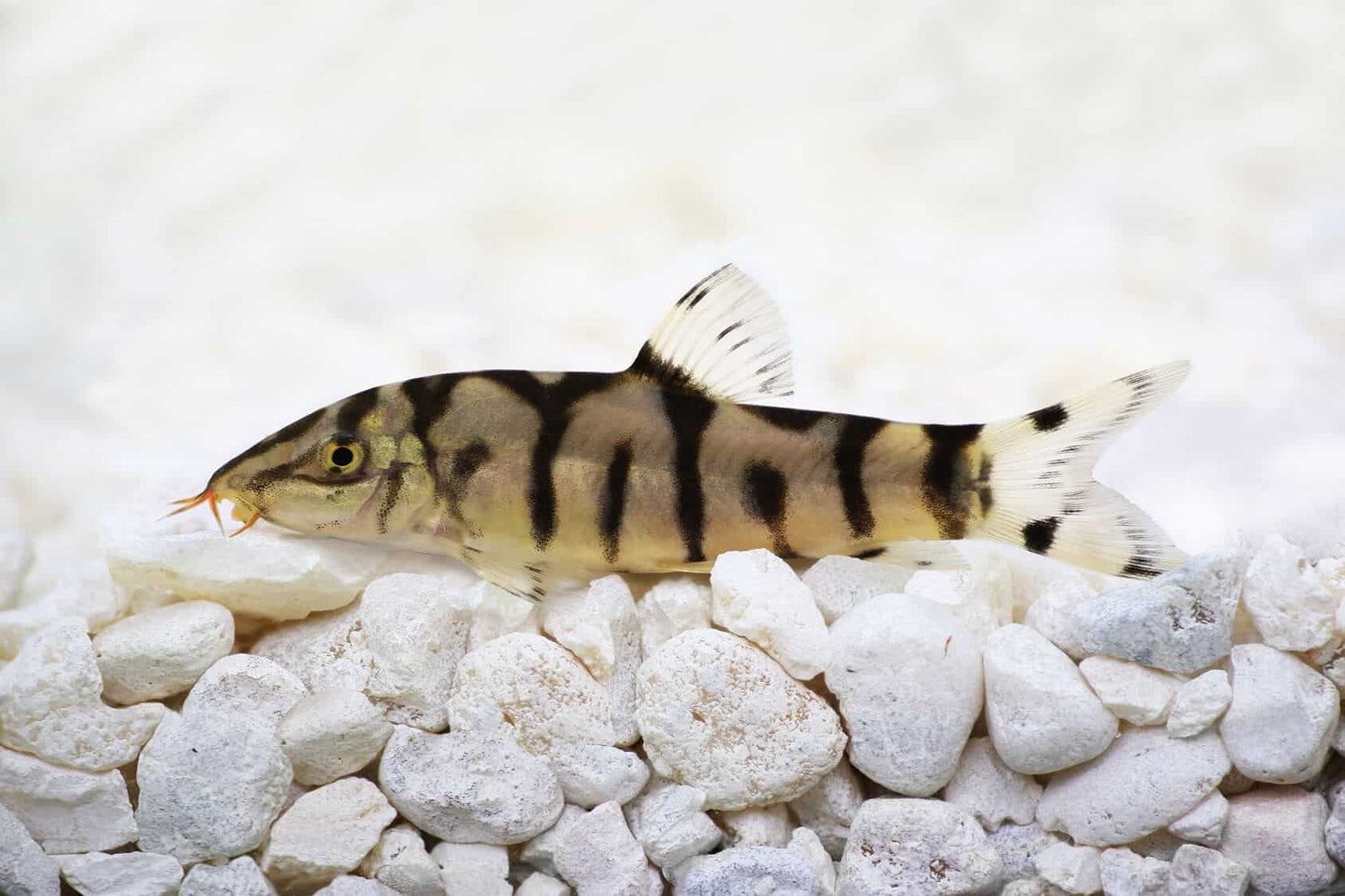
Yo-Yo Loaches are active, intelligent freshwater fish known for their bold patterns and playful, busy behaviour. They are entertaining bottom-dwellers that spend much of their time exploring, scavenging, and interacting with each other. While often sold as community fish, they are best suited to well-planned aquariums with enough space, the right tank mates, and a proper group of their own kind.
Care Level: Moderate
Temperament: Active, social, and can be boisterous
Maximum Size: Around 13–15 cm in the aquarium trade is commonly cited for this species group.
Minimum Tank Size:
A larger aquarium is recommended for Yo-Yo Loaches, with around 200 litres or more being a sensible minimum for a proper group long term. Smaller tanks are sometimes suggested for juveniles, but adults are active fish that need floor space, hiding places, and room to establish a social structure.
How Many Should Be Kept Together?
Yo-Yo Loaches should not be kept alone. They are social fish and do best in a group of at least 5 or more, with larger groups often working even better. Keeping too few can lead to stress, shyness, or more aggressive behaviour toward tank mates.
Ideal Water Temperature:
A good working range is around 24–28°C, with warm, stable water generally preferred. Some sources note they can be kept slightly cooler or warmer, but consistency and good oxygenation are important.
Water Conditions:
Yo-Yo Loaches do best in clean, well-filtered water with good oxygen levels. They are commonly recommended for soft to medium water with a slightly acidic to neutral pH, though they can adapt to a reasonable range when conditions are stable.
Diet:
They are omnivorous scavengers and should be fed a varied diet including quality sinking foods, pellets, wafers, frozen foods, and other protein-rich foods. They will also browse for leftover food around the tank, but they should not be relied on as the tank’s clean-up crew alone.
Compatibility:
Yo-Yo Loaches can work in larger community aquariums, but they are not ideal for very slow, delicate, or tiny tank mates. They can be feisty and may harass weaker fish, especially if kept in too small a group or too small a tank.
Things to Be Cautious Of:
These loaches have sensitive barbels, so a soft substrate such as sand or smooth gravel is best. Sharp gravel can damage them. They also enjoy digging and active foraging, which means they may disturb plants that are not well rooted. Like many loaches, they appreciate plenty of hiding spaces such as wood, caves, and rockwork.
Helpful Notes:
Yo-Yo Loaches are often chosen for their personality and movement, but they are better suited to aquarists who can provide enough space and a proper social group. They are far more confident and natural in behaviour when kept in a well-structured group rather than singly or in pairs.
Share