Live Animal
Tiger Barb Brook
Tiger Barb Brook
Couldn't load pickup availability
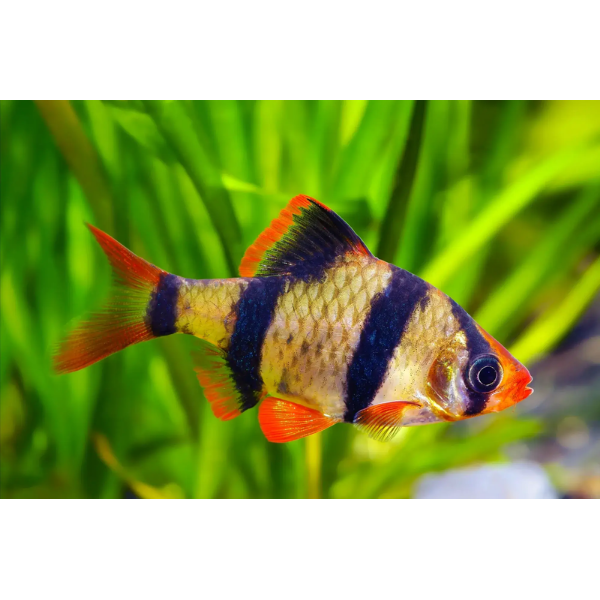
Tiger Barbs are vibrant, energetic tropical freshwater fish known for their striking black stripes, golden-orange bodies and bright red fins. Their bold colouring and lively personalities make them a popular choice for aquarists wanting plenty of movement and activity in their aquarium.
These active schooling fish are naturally social and are particularly entertaining when kept in larger groups, where they can be seen chasing, interacting and swimming together.
Although Tiger Barbs are hardy and relatively easy to care for, they are known for their boisterous behaviour and occasional fin-nipping. They are best suited to aquariums with plenty of swimming space, a good-sized group of their own kind and carefully selected tank mates.
Scientific Name: Puntigrus tetrazona
Care Level: Easy to moderate
Temperament: Active, social and semi-aggressive
Maximum Size: Approximately 6–7 cm
Lifespan: Approximately 5–7 years with proper care
Minimum Tank Size:
An aquarium of approximately 100 litres or larger is recommended for a group of Tiger Barbs, with larger tanks preferred for additional swimming space and improved water stability.
Tiger Barbs are highly active swimmers and benefit from longer aquariums, ideally with at least 80 cm of swimming length.
A planted aquarium with driftwood, smooth rocks and sheltered areas around the edges provides an excellent environment while leaving plenty of open space for schooling.
Good filtration, well-oxygenated water and gentle to moderate water movement are ideal.
How Many Should Be Kept Together?
Tiger Barbs should be kept in groups of at least 8, although groups of 10–12 or more are strongly recommended when aquarium space allows.
These fish naturally establish a social hierarchy within their group. Keeping sufficient numbers helps distribute chasing and competitive behaviour, reducing the likelihood of aggression towards other aquarium inhabitants.
When kept individually or in small groups, Tiger Barbs can become more aggressive and are more likely to nip the fins of other fish.
Tiger Barbs can also school with other colour varieties of the same species, including Gold Tiger Barbs and Green Tiger Barbs.
Ideal Water Temperature:
22–27°C, with approximately 24–26°C being an excellent target for everyday care.
Tiger Barbs are tropical fish and require stable water temperatures, generally maintained with a reliable aquarium heater.
Water Conditions:
Tiger Barbs thrive in clean, well-filtered freshwater with stable water parameters and good oxygenation.
-
Ideal pH: Approximately 6.0–7.5
-
Water Hardness: Soft to moderately hard
-
Water Flow: Gentle to moderate
-
Ammonia and Nitrite: 0 ppm
-
Aquarium: Fully cycled and regularly maintained
They are relatively adaptable to different water conditions but should not be exposed to sudden changes in temperature or water chemistry.
Regular partial water changes and good filtration will help maintain their health and activity levels.
Diet:
Tiger Barbs are omnivores and enjoy a varied diet containing both plant-based and protein-rich foods.
Quality tropical flakes or small pellets should form the foundation of their diet, supplemented with occasional frozen or live foods such as bloodworms, brine shrimp and daphnia.
They may also enjoy suitable vegetable-based foods for additional variety.
Tiger Barbs are enthusiastic feeders, so offer controlled portions and avoid overfeeding.
Compatibility:
Tiger Barbs are best suited to active community aquariums with similarly sized, robust fish that can comfortably handle their energetic behaviour.
Suitable tank mates may include:
-
Gold Tiger Barbs
-
Green Tiger Barbs
-
Zebra Danios
-
Larger, active Rainbowfish
-
Yo-Yo Loaches in suitably sized aquariums
-
Other robust, compatible community fish
Avoid housing Tiger Barbs with slow-moving, delicate or long-finned species.
Fish such as Bettas, Guppies, Angelfish and many Gouramis are generally unsuitable companions due to the risk of fin-nipping and harassment.
Things to Be Cautious Of:
-
Fin-Nipping: Tiger Barbs are known for nipping the fins of other fish, particularly slow-moving or long-finned species.
-
Group Size: They should be kept in groups of at least 8, with larger groups recommended to help manage aggression.
-
Aggression: Although not typically aggressive predators, they can be boisterous and may chase or intimidate smaller, timid fish.
-
Swimming Space: These active fish require plenty of open swimming room and should not be kept in small or overcrowded aquariums.
-
Tank Mate Selection: Avoid delicate species such as Bettas, Angelfish and fancy Guppies.
-
Feeding Behaviour: Tiger Barbs can be enthusiastic feeders and may outcompete slower fish for food.
-
Water Quality: They require clean, stable aquarium conditions and should only be introduced into fully cycled aquariums.
-
Colour Variation: Natural differences in stripe intensity, body colour and fin colouring may occur between individual fish.
Helpful Notes:
Tiger Barbs are a fantastic choice for aquarists wanting a colourful, lively and entertaining schooling fish.
Their striking black stripes and warm orange colouring create a beautiful contrast against green aquatic plants and natural decorations.
They are particularly enjoyable to watch in larger groups, where their natural social interactions and energetic swimming patterns become more noticeable.
Although they are relatively hardy fish, their active temperament means they require more careful tank mate selection than many peaceful community species.
Providing a suitable group, plenty of swimming space, clean water and compatible tank mates will help these energetic fish thrive.
Share