Live Animal
Red-Finned Rasbora
Red-Finned Rasbora
Couldn't load pickup availability
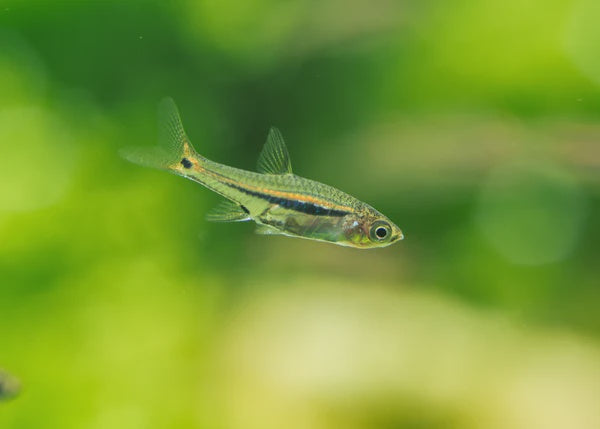
Red Finned Rasboras are slim, active, peaceful schooling fish that do very well in community aquariums. They have a silvery body with dark and golden tones through the flank, and red colouring around the tail that gives them their common name. They are hardy, adaptable fish and make a great option for aquarists wanting a lively midwater schooling species.
Care Level: Easy
Temperament: Peaceful, active, schooling
Maximum Size: Usually around 5–6 cm as adults.
Minimum Tank Size:
A tank of around 60 litres or more is a sensible starting point for a small group, though a longer tank is always better because these fish are active swimmers. A mature, planted aquarium with open midwater swimming space suits them best.
How Many Should Be Kept Together?
Red Finned Rasboras should be kept in a group of at least 6 or more. Like many rasboras, they are much more confident, active, and natural in behaviour when kept in a proper shoal rather than alone or in pairs.
Ideal Water Temperature:
A good working range is around 22–26°C, though they are considered fairly adaptable if the aquarium is stable and well maintained. Consistency is more important than chasing an exact number.
Water Conditions:
They do best in clean, well-filtered water, generally with soft to moderately hard water and slightly acidic to neutral conditions. A planted tank with some shaded areas helps them settle and show better colour.
Diet:
Red Finned Rasboras are omnivores and usually accept a range of quality dry foods, including flakes and small pellets. They also benefit from variety such as small frozen or live foods to support condition and colour.
Compatibility:
They are well suited to peaceful community aquariums with other calm, similarly sized fish. They are not a good match for large, aggressive, or very boisterous tank mates.
Things to Be Cautious Of:
Like many schooling fish, they may become shy or less settled if kept in too small a group. They also look and behave best in a mature aquarium with stable water quality rather than a newly set-up tank.
Helpful Notes:
This species is often described as hardy and adaptable, which makes it a nice choice for peaceful community setups. They look especially good in planted tanks where their metallic tones and red tail colouring stand out.
Share